AC100 Gear & Local Resources
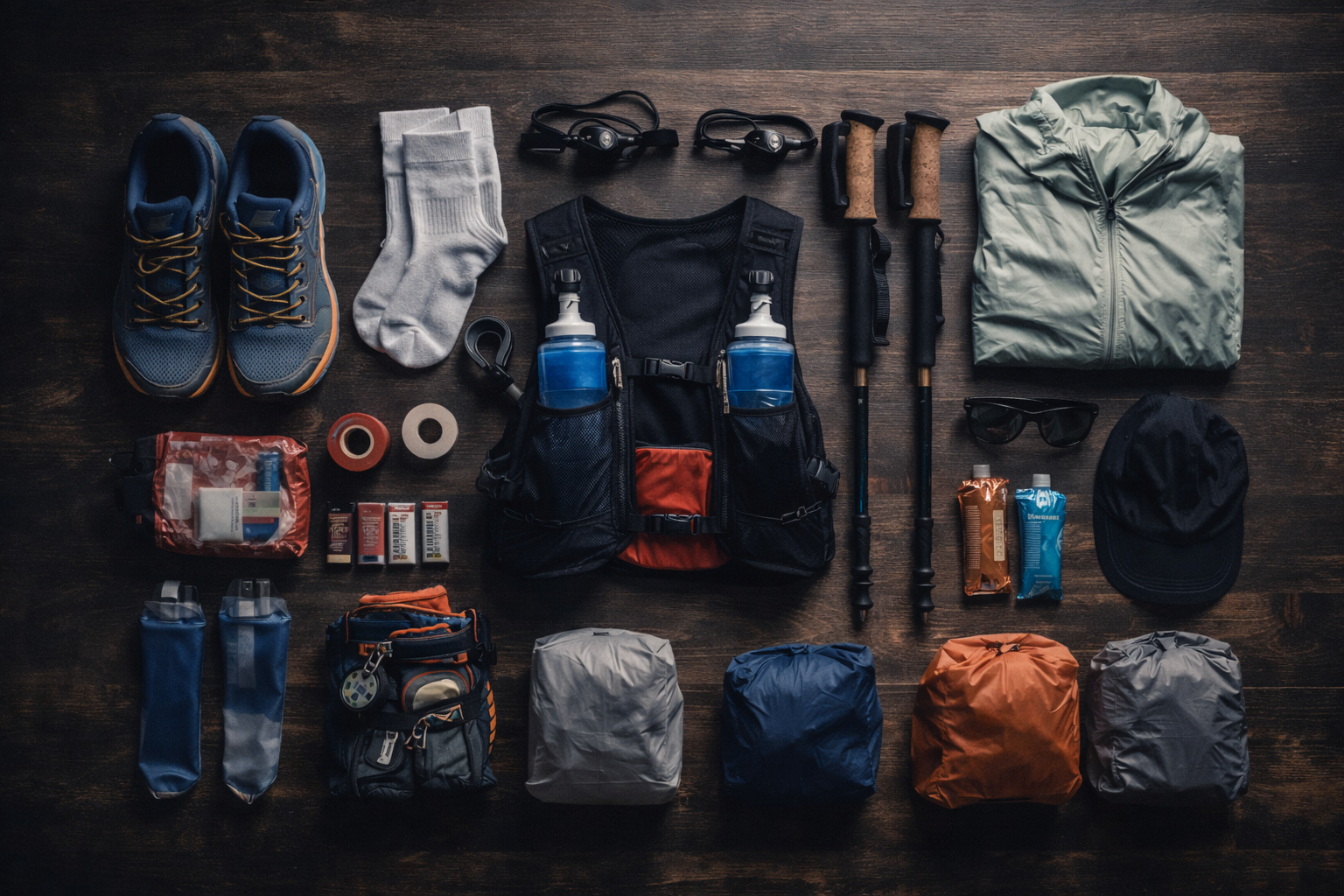
Most 100-mile gear lists are generic. Angeles Crest 100 runs through dusty, rocky singletrack, hot canyons, and a long stretch of night above Los Angeles. This page focuses on the few systems that matter most for this race — and where to dial them in if you’re training around the San Gabriels.
Affiliate disclosure: Some links on this page are affiliate links, meaning I may earn a commission if you buy—at no extra cost to you. As an Amazon Associate I earn from qualifying purchases.
Need concise tactical checklists? Visit the Free Guides hub.
1. What matters most at AC100
Before specific models or brands, focus on these systems:
- Feet: shoes and socks that stay comfortable on rocky, dusty trail for 24–33 hours.
- Night kit: a reliable primary headlamp, a backup, and batteries you’ve actually tested.
- Heat management: sun protection, ice carry, and clothing that works in hot canyons.
- Hydration & calories: a system you can refill quickly and eat from when tired.
- Drop bag kit: small, repeatable setups you can manage even when your brain is fried.
2. Feet & shoes
You’ll be on your feet for a very long time over mixed terrain: smoother singletrack, rocky sections, some fire road, and dusty descents. Your choice of shoes and socks needs to survive all of that.
Want the full breakdown (fit, alternatives, blister prevention, and quick picks)? Best AC100 shoes for the San Gabriels →
Prefer wide toe box + flatter ride? See: zero-drop / “barefoot-style” picks →
Daily training shoes
Use these for most of your build-up miles. Something durable, comfortable, and forgiving enough for long back-to-back days.
- Comfort over “fast” feel.
- Enough cushion for long descents on tired legs.
- Grip that works on loose gravel and hardpack.
Recommended starter shoe: Hoka Speedgoat 6 — cushioned and grippy for long, rocky AC100-style training days.
Race pair (or rotation)
Many runners use the same model they trained in, sometimes with a fresh pair swapped at a major aid station.
- Something you’ve worn for at least a few long runs.
- No last-minute “new shoe day” surprises.
- Room in the toe box for swelling.
Affiliate link block: “My go-to race shoes for AC100-style courses”.
Socks & foot care
Blisters and maceration ruin more races than lack of fitness. Build a simple, repeatable foot-care routine.
- Two or three sock models that work for you.
- Anti-friction lube, tape, and small scissors.
- Spare socks in key drop bags.
Add 1–2 sock recs and a basic blister kit link here.
3. Night kit
You’ll likely spend many hours in the dark, especially if you’re closer to the back of the pack. Reliable light is non-negotiable.
- Primary headlamp with enough lumens and battery life for your pace.
- Backup headlamp or handheld light (not just spare batteries).
- Fresh batteries or charged power banks in at least one drop bag.
Primary headlamp (premium): Petzl NAO RL
1500 lumens, rechargeable, built for long ultra nights.
Backup light (do not skip this)
A second light you can turn on instantly if the primary fails. Keep it in an easy-to-reach pocket.
Pick a backup →Power strategy
One small power bank + the right charging cable in a drop bag keeps you safe if your timeline slips.
Power bank options →Deep dive: AC100 headlamps + battery plan →
Link hygiene: affiliate links should use rel="nofollow sponsored noopener noreferrer".
4. Heat & sun management
AC100 can be hot and exposed in certain canyons and ridges. Plan as if you’ll see more heat than you want to, even in a “mild” year.
- Light-colored hat with good coverage.
- Ice bandana or neck wrap for hot sections.
- Light arm sleeves and breathable top.
- High-SPF sunscreen that doesn’t sting your eyes.
Add specific hat, sleeves, and cooling gear links here once you’ve tested them in SoCal heat.
5. Hydration & calories
Aid stations are generous, but you still need a system you can manage when tired and a bit cooked. Think in simple rules, not complex math.
Hydration systems
- Trail vest with room for bottles, food, and a light shell.
- Two or more soft flasks or handheld bottles.
- Optional: bladder for longer dry stretches if you prefer it.
Deep dive: Hydration vests + flask/bladder setup →
Best vest pick: Salomon ADV Skin 12
Calories that work late
- At least 2–3 types of calories you know your stomach tolerates.
- Mix of drinks, gels, and “real food” so you’re not stuck with one thing.
- Backup emergency calories in each drop bag.
Keep it simple: pick 2–3 calorie options you can eat when tired, and test them on long runs. Build one ‘default hour’ you can repeat without thinking.
6. Drop bag basics
Drop bags are your entire support system if you’re running Solo, and a useful backup even if you have crew. Keep the system simple and repeatable.
- Durable bags that are easy to spot and open in the dark.
- Big, clear labels with your name, bib, and aid station.
- Standard “mini-kit” repeated in multiple bags (socks, lube, calories, small light).
Navigation + safety
GPS watch (battery monster): Garmin Enduro 3
For long events: battery-first GPS + trail features.
Alternative GPS watch: COROS VERTIX 2S
Huge battery life, great for long days and race weekends.
Satellite communicator: Garmin inReach Mini 2
Peace-of-mind beyond cell coverage (2-way messaging + SOS).
Deep dive: GPS watches + inReach for ultras →
Add links for simple durable bags, labels, and any small organizers you actually like here.
7. Local running shops near the San Gabriels
If you’re in Southern California, you don’t have to guess online. These shops can help you test shoes, packs, and lights in person.
I’ll be building out short profiles of the most AC100-relevant shops here (hours, strengths, nearby trails, and whether they host group runs in the San Gabriels).
- Shop A – short description and what they’re best at.
- Shop B – short description and what they’re best at.
- Shop C – short description and what they’re best at.
Long term: this is where you can feature local partners or sponsors.
8. Lodging & food: Wrightwood and Pasadena/Altadena
Where you sleep and eat before and after the race matters, especially if you’re traveling with family or crew.
- Wrightwood base: small cabins, motels, and rentals close to the start.
- Pasadena/Altadena base: hotels and rentals near the finish and freeways.
- Food: runner-friendly options for pre-race and post-race meals.
When you’re ready, you can add hotel/booking affiliate links for “where to stay race week” here.
9. Recovery & support in the SGV / LA area
If you live in or near the San Gabriel Valley, having a small recovery crew can keep you training consistently.
- Sports PT clinics that understand trail and ultra runners.
- Massage therapists experienced with heavy leg volume.
- Chiro and other specialists you actually trust.
Compression boots: Normatec 3 Legs
Optional, but clutch if you want to recover faster between big training weeks.
Check price →Massage gun: Theragun Prime
Simple, reliable choice for calves, quads, hips, and feet.
Check price →optional upgrades, not required to finish.
10. Quick checklist before race week
- You’ve done at least one long training run with your full race vest and lights.
- Your feet setup (shoes, socks, lube) has been tested on long descents.
- You’ve practiced your hydration and calorie system in heat and at night.
- All drop bags are packed, labeled, and photographed for reference.
- Lodging and transport to start/finish are confirmed.
Later, this checklist can become a printable PDF or part of a low-cost AC100 gear packet. For now, use it as your pre-race sanity check.
From here, you may want to read: